


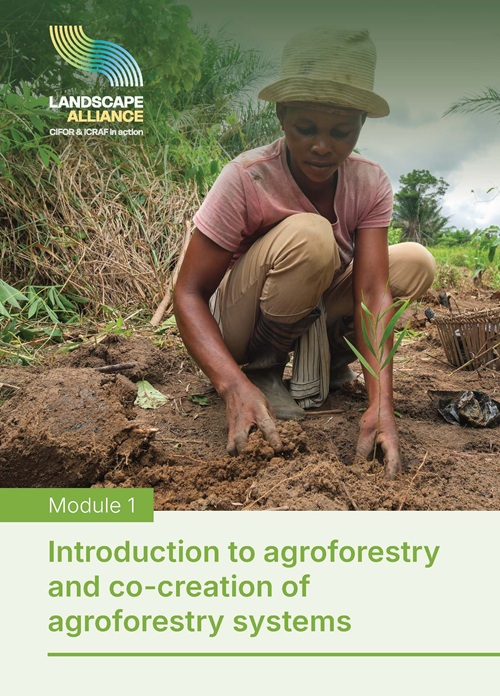
This module introduces the background, concepts, principles and practices of agroforestry. As a developing scientific field and a promising land-use approach, agroforestry offers solutions to various land-use challenges. The module explains what agroforestry is, and highlights its potential benefits, co-creation of agroforestry systems and key constraints, exploring the interactions between its different components. Co-creation of agroforestry systems combines farmers’ traditional ecological knowledge with scientific expertise to design customized land-use systems, which enhance biodiversity, soil health and livelihoods. The module also introduces the concept of Multipurpose Trees and Shrubs on agricultural landscape and gives an overview of the main agroforestry practices promoted in Malawi. This field guide also provides references, especially to available manuals for agroforestry innovations and practices.
This work is licensed under CC-BY 4.0
This work is licensed under CC-BY 4.0
Export citation:
RIS (.ris)
Endnote (.ciw)
Publisher
CIFOR and ICRAF as Landscape Alliance: Bogor, Indonesia and Nairobi, Kenya
Publication year
2026
Authors
Haswell, C.; Njoloma, J.; Chikwense, K.; Udaya Sekhar, N.; Tesfai, M.; Chikuta, C.; Nyoka, I.
Language
English
Keywords
agroecology, agroforestry, agroforestry system, indigenous knowledge, land management, livelihoods, natural regeneration, participatory approaches, silviculture, soil fertility, sustainable agriculture
Geographic
Malawi


